Modular information domains
Power, water, exterior conditions, security, and continuity are distinct modules with a consistent visual grammar.
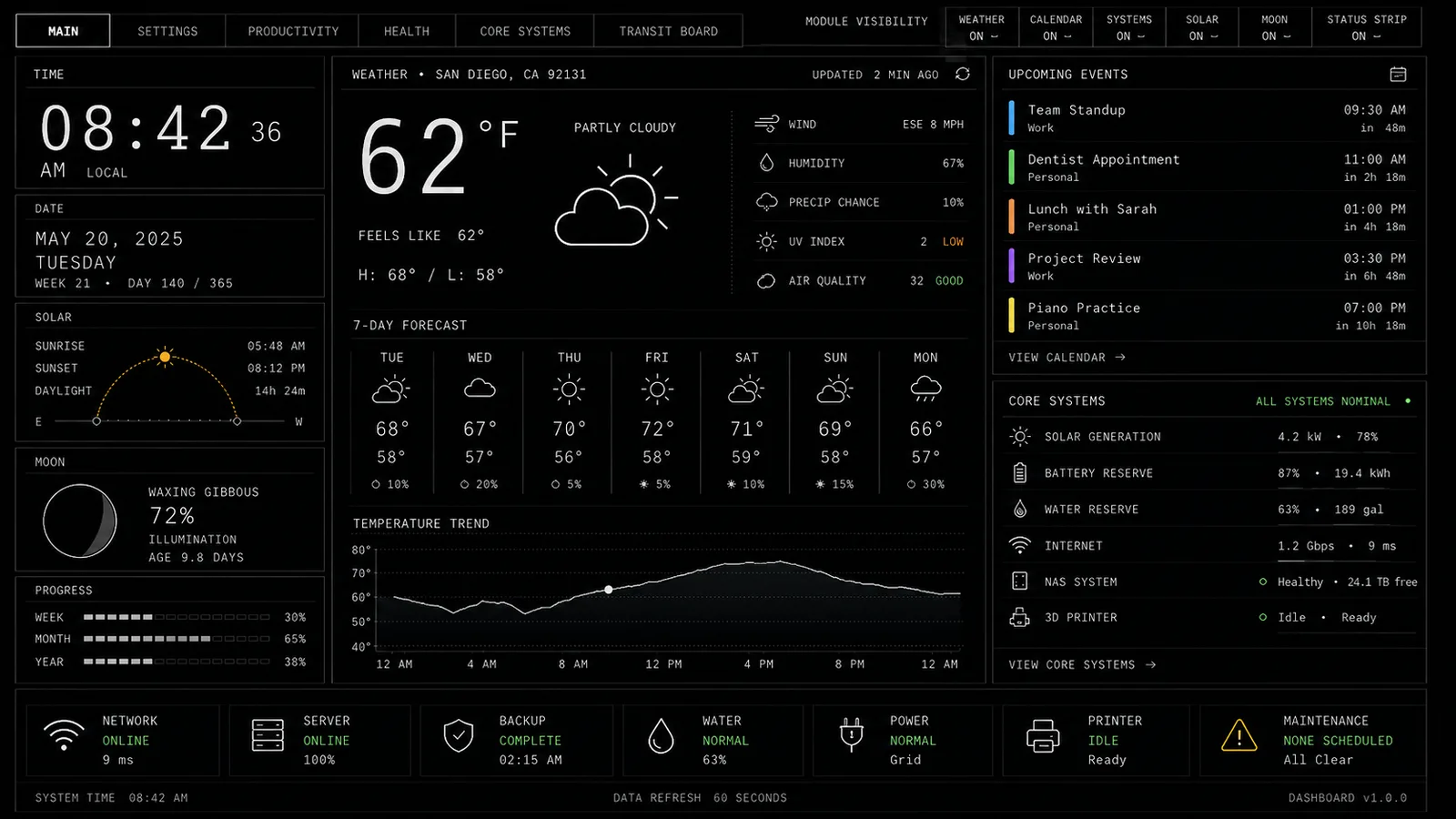
A browser-based operating environment that makes continuity, environmental conditions, resources, and security visible without turning the home into a spectacle of screens.
The system is designed to help an operator understand the residence before it acts on their behalf. Core, exterior, power, water, security, and settings panels expose relationships instead of hiding them behind a single score.
The current build combines live local weather when available with simulated infrastructure data. Nominal, adverse, and critical modes reveal how visual state and operational guidance should change under stress.
Power, water, exterior conditions, security, and continuity are distinct modules with a consistent visual grammar.
Operating levels alter color, animation tempo, values, advisories, and system posture rather than merely changing a badge.
The interface flexes from wall display to tablet and mobile; it uses lightweight DOM, CSS, SVG, and restrained procedural motion.
The initial dashboard established the monochrome grid, modular visibility, system strip, and high-density data language. Sanctuary OS refocused that language around the home as infrastructure.
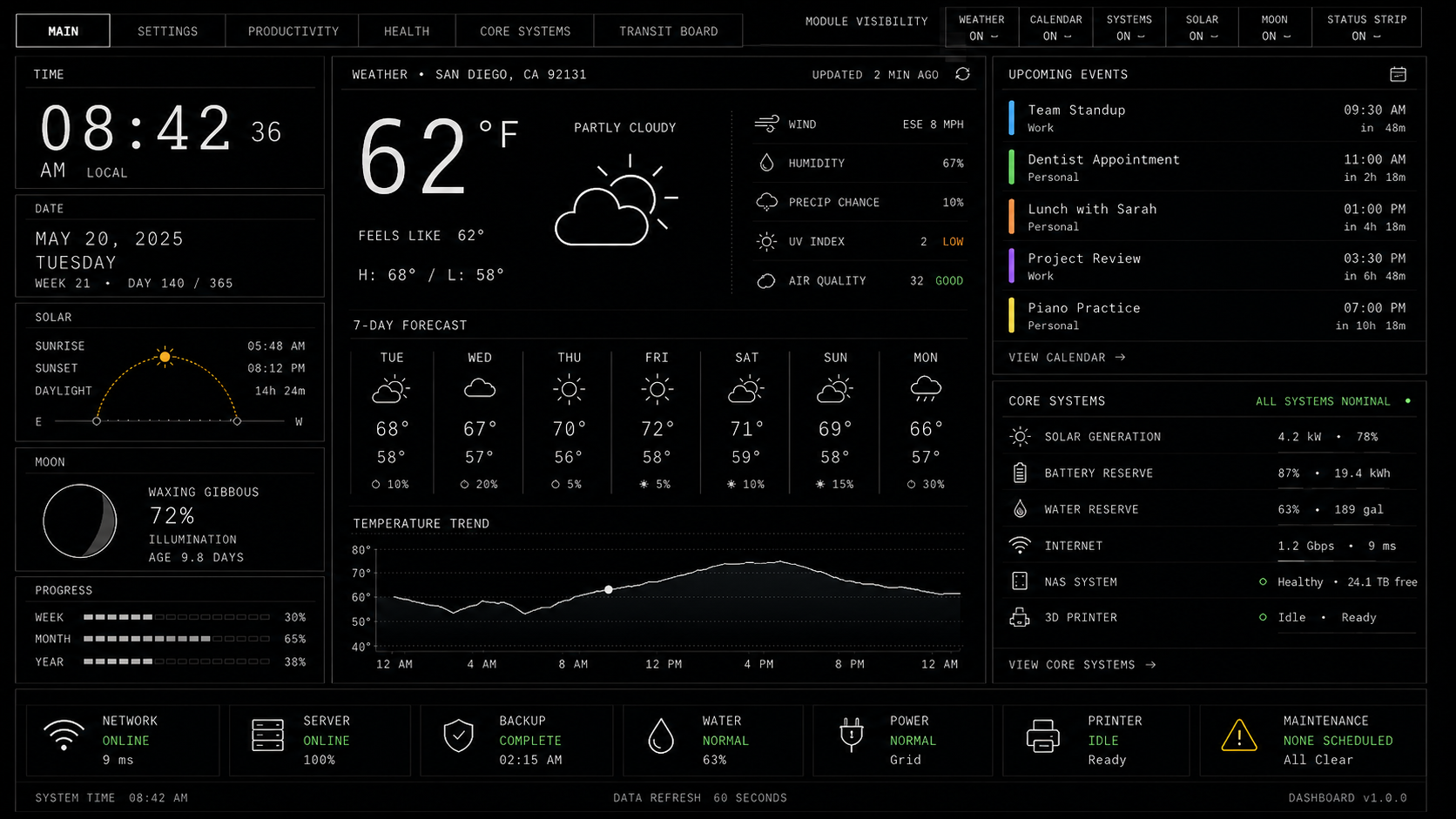
An early general-purpose personal dashboard combining time, weather, calendar, health, productivity, and home systems.
A dedicated operational interface for the residence, with explicit system state, resource posture, and environmental guidance.
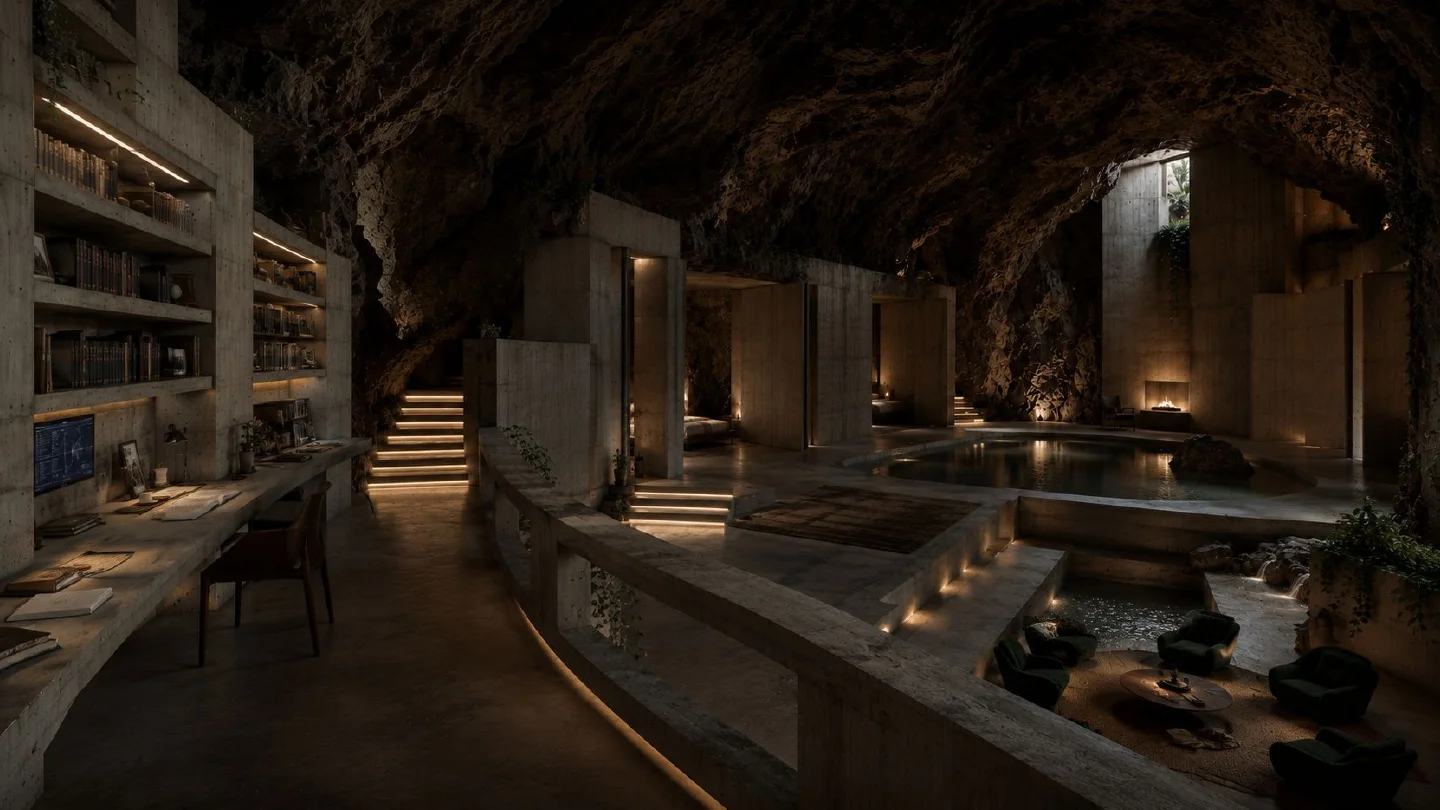
The intended deployment path is a wall display or embedded touchscreen connected to sensors, a local server, weather services, and controllable infrastructure. The present build is a functional simulation and interface prototype.